Best Beaches Corsica 2026 – Top 12 with Map
Palombaggia, Rondinara, Saleccia & Bonifacio: 12 beaches that show why Corsica is, for me, the more honest Sardinia – with map and insider tips.
Ready to go? Book your stay or plan the perfect trip.
Free cancellation • Best-price guarantee
Corsica is the kind of island where you step off the plane and notice the air before anything else. Maquis. Warm pine resin. Salt on the breeze. The French call it *Île de Beauté*, and after three weeks with a rental car, a snorkel, and a growing respect for mountain roads, I understand why — with one warning: Corsica also asks for patience. The roads are narrow, the signs often Corsican, and the *plage* that looked blissfully empty at breakfast can be shoulder-to-shoulder by lunch. Accept the rhythm, start early, and you’ll find some of the clearest water in the western Mediterranean.
This guide is built around the twelve beaches I actually recommend to friends — from famous Palombaggia to the small, half-hidden cove of Petit Sperone near Bonifacio. You’ll find an interactive map with every stop, straight notes on access (a few are boat-only or 4x4 territory), and timing advice, because in Corsica the hour you arrive can change the whole day.
🥇 1. Plage de Palombaggia — Corsica's postcard
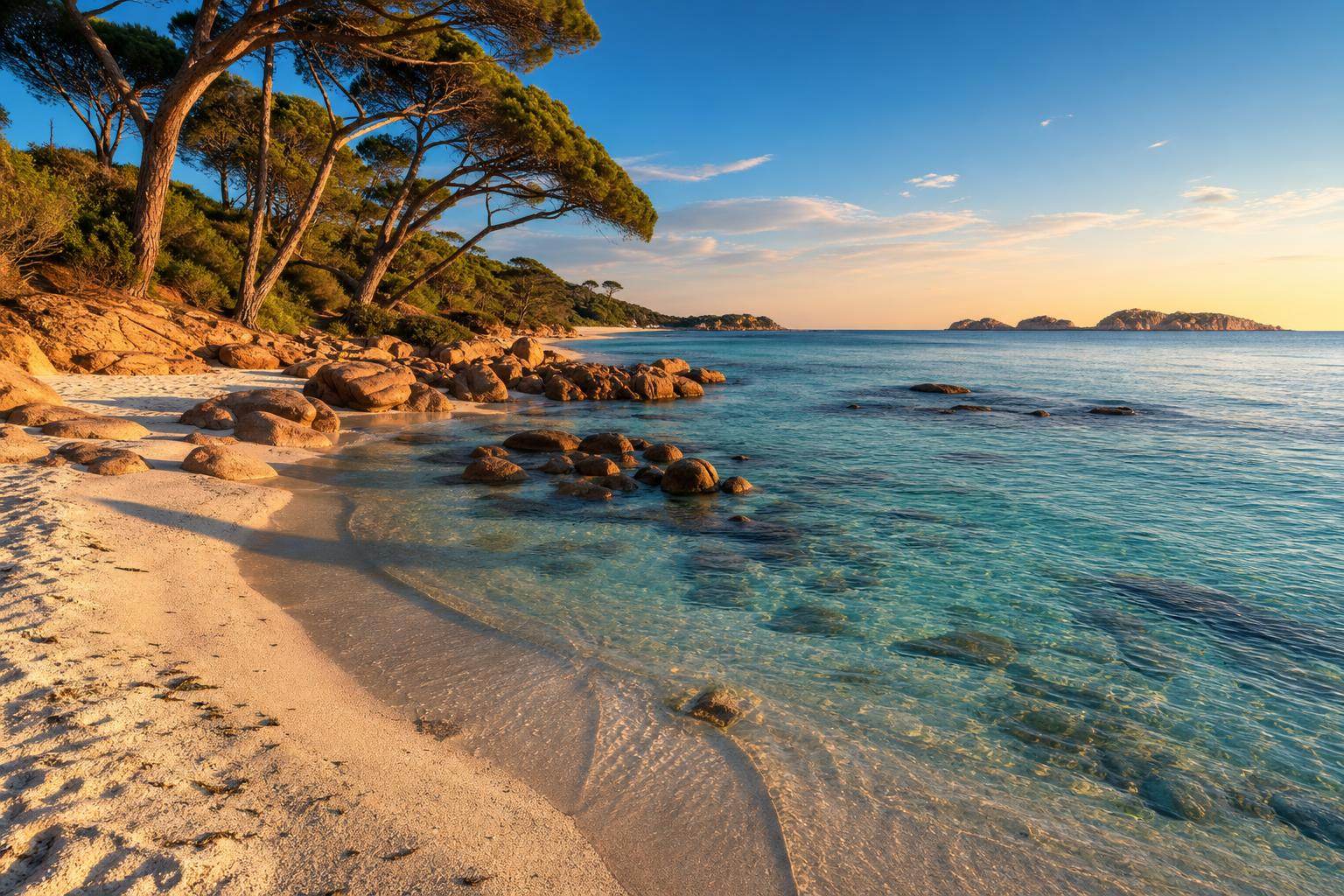
Red granite boulders, umbrella pines, a clean sweep of pale sand — Palombaggia appears in every travel magazine for a reason. Yes, in July it gets busy. But arrive at seven in the morning, when the first light turns the rocks copper-red, and for a brief, perfect spell you may have it nearly to yourself.
📍 Porto-Vecchio, southeast · ⏰ Tip: before 9am or after 5pm
🥈 2. Plage de Rondinara — the perfect shell
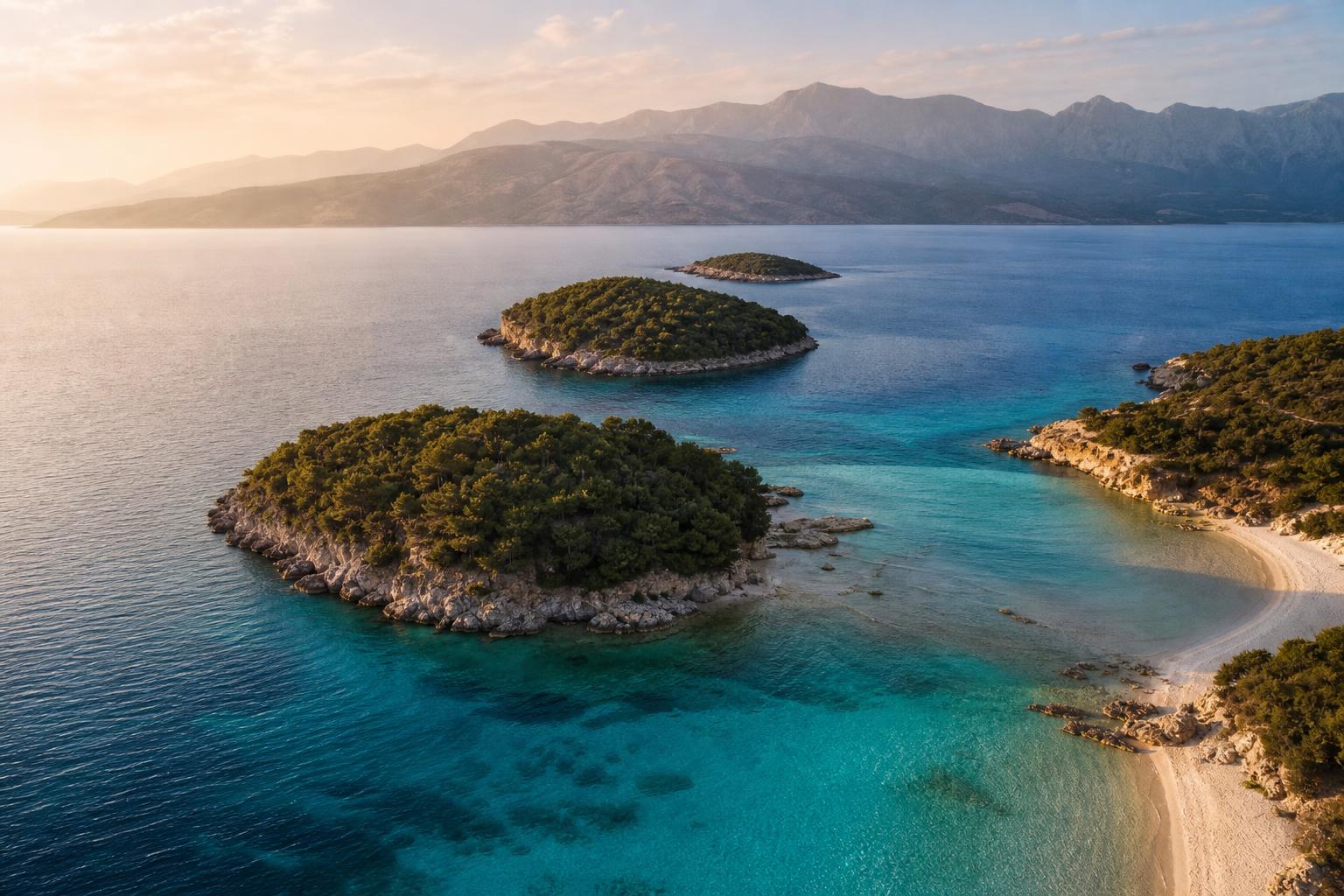
Seen from above, Rondinara looks like a shell pressed into the coastline. The water is shallow, warm, and easy; you can wade a hundred metres from shore and still be only chest-deep. There are almost no buildings, just one small beach restaurant near the car park, then sand, scrub, and sea. A reliable choice for families.
📖 You might also like: Best Beaches Albania 2026 – Top 9 on the Riviera with Map
📍 Between Porto-Vecchio and Bonifacio · 👨👩👧 Very family-friendly
🥉 3. Plage de Santa Giulia — the lagoon
Santa Giulia feels like Palombaggia’s softer, quieter sister, almost sealed off from the open sea by a sandbank. The water lies still and glassy, more pool than bay — especially good for SUP in the late afternoon, once the wind has dropped.
📍 Porto-Vecchio, southeast · 🛶 Activities: SUP, kayak, sailing
4. Plage de Saleccia — the desert by the sea
Saleccia lies in the *Désert des Agriates*, an almost uninhabited stretch of maquis wilderness in the north. You reach it either by 4x4 (45 minutes on a dirt track — every rental company will refuse) or by boat from Saint-Florent. The reward is more than a kilometre of white sand, often empty, and water with a colour you’d sooner expect in French Polynesia.
📍 Désert des Agriates, northwest · 🚗 Access: 4x4 or boat
⭐ Bring water and food — there's nothing on site.
5. Plage du Lotu — Saleccia's little sister
Lotu sits close by, but it is much easier to reach: twenty minutes by boat from Saint-Florent. It’s smaller and less remote than Saleccia, though still beautiful, and it asks far less effort. A good plan is to spend the morning at Lotu, then take the two-hour coast walk over to Saleccia.
📖 Read more: Top 10 All-Inclusive Caribbean Resorts for 2026
📍 Désert des Agriates · 🚤 Access: boat from Saint-Florent (20 min)
6. Plage de Petit Sperone — the hidden jewel
Beside a golf club near Bonifacio, a narrow path slips through the maquis to a tiny cove. There are only a few square metres of sand, clear water over pale rock, and that pleasing feeling that you’ve found something not everyone bothers to look for. Shade is limited, so come early.
📍 Bonifacio, southern tip · 💎 Insider spot
7. Calanques de Piana — rock cathedrals over the sea
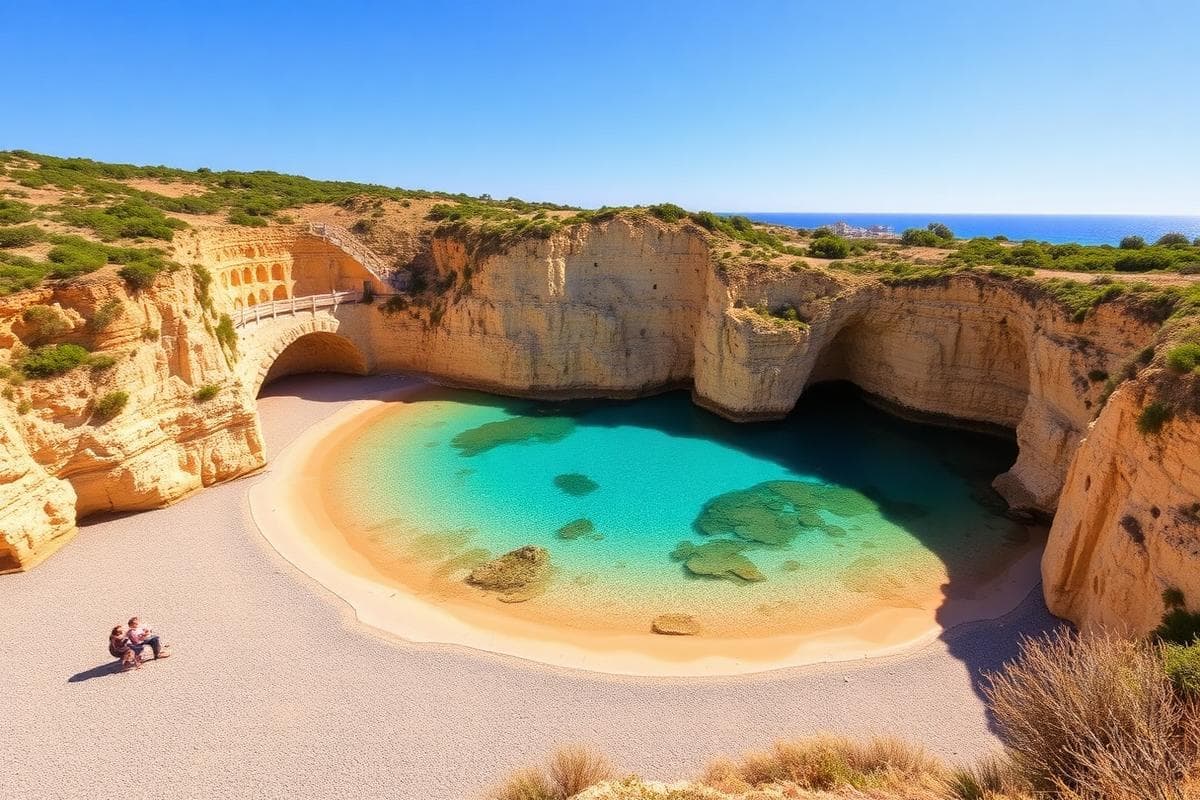
This is not a classic beach stop, but a UNESCO stretch of red granite dropping into the sea in wildly sculpted forms. Between the rocks are small coves you can scramble down to for a swim, plus boat tours that enter grottoes you cannot reach otherwise. Treat it as a natural wonder rather than a simple beach day.
📍 Gulf of Porto, west coast · 📸 UNESCO site · ⛵ Boat tour from Porto recommended
8. Plage de l'Ostriconi — where the desert meets the sea
At the western edge of the Agriates, a small river winds through golden dunes before meeting the sea — a scene that feels unusual for the Mediterranean. From the car park on the N1197, it’s a 15-minute walk down, and then the land opens onto a broad, almost Caribbean-looking beach.
📍 Balagne, between Calvi and Saint-Florent · 🥾 15-min walk from N1197
9. Plage de Roccapina — the lion watches
Roccapina is a wide sandy bay, but the sight that stays with you is above the beach: a huge granite outcrop that has looked, for millennia, like a reclining lion. Access is by rough track, so think of it as a half-day trip, ideally with time to climb up to the *Lion de Roccapina*.
📍 Sartène, southwest coast · 🦁 Natural monument above the beach
10. Plage de Cupabia — pure nature
Cupabia is a wide, almost undeveloped bay in the Gulf of Valinco, edged by thick maquis with mountains rising behind it. There is one simple beach shack and not much else. After three days in the Bonifacio crowd, that absence can feel like luxury.
📍 Serra-di-Ferro, west coast · 🌿 Atmosphere: untouched
11. Plage de Tamaricciu — Palombaggia's calm twin
Walk south from Palombaggia along the water for twenty minutes and you’ll reach Tamaricciu, shaded by tamarisk trees. The water is just as clear, the sand just as soft, and the crowds usually thinner. The classic move: a morning photo stop at Palombaggia, then Tamaricciu for the actual swim.
📍 Porto-Vecchio · ⭐ Tip: quieter than Palombaggia
12. Plage d'Arone — where the west goes furthest west
Plage d'Arone is a broad sand beach in a bay where the mountains of the Calanques de Piana fall straight toward the sea. The beach has a bar, loungers, and parking, but the real reason to come is the setting: maquis-covered hills behind you, clear water ahead. Sunsets here are unforgettable.
📍 Piana, west coast · 🏔️ Mountains meet sea
When to go
The best window is early June or the second half of September. The sea sits around 23–25 °C, the maquis is in full bloom in June, and the beaches settle down again in September. July and August are hot and packed — French school holidays — and Palombaggia at noon can feel like a Paris metro station. May and October are excellent for the GR 20, the Calanques, and the towns, though the sea is still cool.
Getting there & a practical tip
Airports: Bastia (north), Calvi (Balagne), Ajaccio (west) and Figari (south, for Bonifacio and Porto-Vecchio). By ship: Corsica ferries from Marseille, Toulon, Nice or Livorno are a smart choice if you want to bring your own car — without one, you won’t get far on the island. Give Corsica at least two weeks if you can; otherwise you’ll spend too much time rushing past it. And one practical rule: keep the tank full, because some mountain regions go a hundred kilometres without a station.
Beyond the beach
Corsica is also a hiking and mountain country. The GR 20 is considered the toughest and most beautiful long-distance trail in Europe, running for 15 days through the island’s spine. Bonifacio, the town on the limestone spur at the southern tip, is essential — and best seen by boat from below. Ajaccio carries its Napoleon history alongside a lively market on Place Foch. In the Balagne, between Calvi and Île-Rousse, mountain villages keep cheese, wine, and Corsican polyphony close to daily life.
Read more
- Best Beaches Sardinia
- Best Beaches Sicily
- Best Beaches Puglia
Plan your adventure
Hotels, flights and cars — all in one place.
Free cancellation • Best-price guarantee